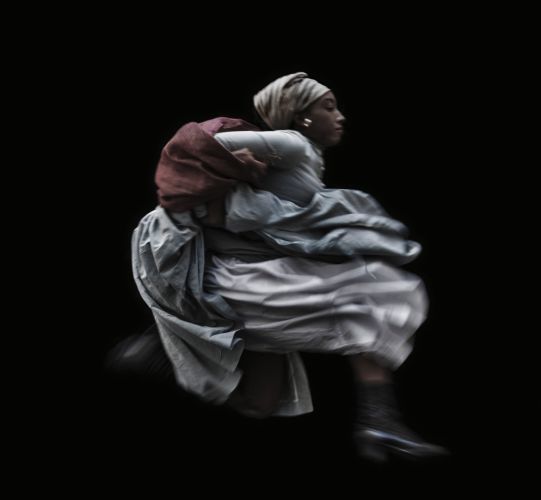
“Blackbirding” is a term dating back to the antebellum era in the United States, for the practice of capturing free and escaped Black people to use them as labor, sanctioned by Fugitive Slave Laws. (The term has since been used to describe kidnapping and forced labor in the South Pacific.) In this truthteller of an album, Queen Esther relates the powerful story of Black folks’ participation in the Civil War, voluntary and involuntary. This practice of stolen and under-paid Black labor is rarely told in histories of the Civil War. Enslaved people provided forced work for the Confederate army as construction laborers and body servants, many on the battlefield. A few also participated in battle. Black soldiers for the Union army, many of whom enlisted with the promise of freedom, were paid less than white soldiers, experienced segregated living conditions, and were given inferior medical care. Black soldiers dug the graves of white soldiers, but they were denied burial in Gettysburg’s National Cemetery. Even Harriet Tubman, who acted as a scout, cook, nurse, and spy for the Union army, was initially denied a pension by the U.S. government. Queen Esther offers her voice, her lyrics, and her insight in the service of these Black fighters whose struggles and resilience haunt the album.
Blackbirding bridges the Civil War to our present moment as a precarious place for Black people seeking home, safety, the rights of full citizenship, justice, and rest. As I listen to the album, I’m reminded of the recent dismissal of charges for the police who invaded Breonna Taylor’s home and murdered her in Kentucky in 2020, as well as of ICE’s occupation, kidnapping, and terrorizing of Black and Brown communities.
For the entire article, click here.